SADO PRIVATE EXPERIENCE Enquire
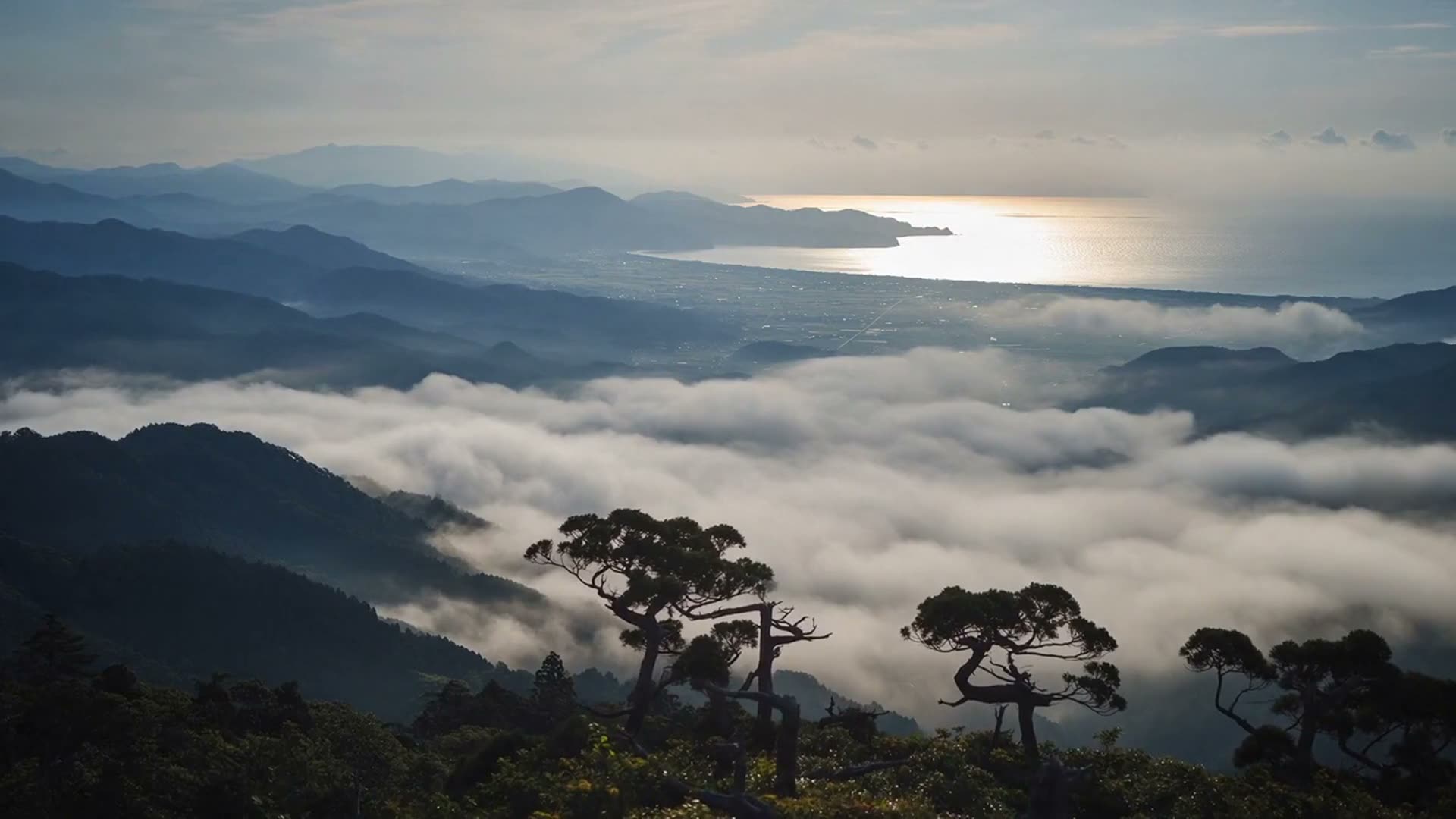
Osado mountains at dawn, sea and cloud in cool first light

SADO PRIVATE EXPERIENCE · Sado, arranged for two.

For guests of Aman Tokyo and Aman Kyoto

The quiet you came to Japan for.

Three days on Sado, arranged privately for two. The chapter after Kyoto.

08:45 Aman Tokyo · 12:37 Ryotsu · 22:00 the terrace

Sado is an island of 855 square kilometres, sixty-seven minutes off the coast of Niigata. It has a gold mine that closed in 1989, more than thirty Noh stages still standing in shrine groves, and a bird that came back. We arrange three days of it for two people. There is no one else on the tour, because there is no tour.

The Japan you cannot find in Tokyo

After Kyoto, an island with room in it.

Kyoto received close to eleven million foreign visitors in 2024, in a city of about 1.4 million people. It is beautiful, and it is full.

Sado is the same country with the crowd taken out. Half again the size of Tokyo’s twenty-three wards, with about forty-six thousand people on it. Its exiles were an emperor, a priest and the man who, with his father, perfected Noh, and what they brought here stayed.

On a ten-day Japan trip it sits where the pause should be. Tokyo, days one to three. Kyoto, days four to six. Sado, days seven to nine. Tokyo, day ten, and home.

Not a detour. The destination.

Sado cedar forest in fog, vertical trunks in pale light
Aerial view of Sado’s rocky coast in late light
  1. Tokyo 1–3
  2. Kyoto 4–6
  3. Sado 7–9
  4. Tokyo 10

The island in numbers

855 km²

An island half again the size of Tokyo’s twenty-three wards

67 min

Niigata to Ryotsu by hydrofoil, five sailings a day, more in summer

30+

Noh stages still standing, most of them in shrine groves

473

Wild toki counted at the end of 2025, after the last wild birds in Japan were taken into care here in 1981

The golden island

Cedar-lined stone steps at Mano Goryo in soft forest light

In that sea there is a golden island. If you inquire of its name, it is called Sado.”

Zeami, Kintōshō, 1436. The line that opens Japan’s World Heritage nomination.

Zeami was over seventy when the shogun banished him here in 1434. Two years later he wrote the island down. In July 2024 the island's gold mines were inscribed as World Heritage, five hundred and eighty-eight years after the poem.

SADO 3 DAYS PRIVATE JOURNEY

Three days. One island. Told hour by hour.

This is a typical shape. Yours is drawn around your dates, the tide and the season.

Hydrofoil approaching Sado across the Sea of Japan

Day one — Descent.

  1. Aman Tokyo. The hotel car to Tokyo Station takes five minutes.
  2. The Shinkansen north, Green Car or Gran Class, with the breakfast hamper we pack.
  3. Niigata. The hydrofoil leaves at half past eleven every day of the year but one.
  4. Ryotsu. Your driver and your concierge are on the quay.
  5. Sado Kinzan. The Edo tunnels by hand-lamp, about an hour.
  6. The 1647 pit, April to November, on request. About seventy minutes more, at ten degrees.
  7. Kitazawa, later in summer. The flotation plant ruins at blue hour. From October the lights come on while you stand there.
  8. The house. The chef is already in the kitchen.
Sake brewery interior, cedar tanks in cool morning light

Day two — The island.

  1. Ryotsu harbour with a fisherman, on request. Or sleep.
  2. A brewery, typically before the public hour, on request.
  3. Ogi. Lunch in Shukunegi, in a shipowner’s house when it is open for two. Then a cedar tub boat in the cove.
  4. Salt works on the Nanaura coast. Seawater, wood, and hours of watching.
  5. Noh by torchlight, on request, or a public shrine night if that is what the calendar gives.
Iwakubi rice terraces above the sea at first light

Day three — Hands and water.

  1. Iwakubi. Four hundred and sixty terraces above the sea, at first light.
  2. Nishimikawa. Panning the gravels that were worked before Kyoto had a shogun.
  3. Mumyoi clay on the wheel. Your cup is fired and sent on.
  4. The Niibo paddies. Toki, if they choose to be seen.
  5. Dinner at the house, for two, cooked by a chef who came for you.
  6. The terrace. The Milky Way, in season. Squid-boat lamps on the horizon, in summer.
Stone path lit by paper lanterns at night

The morning after.

  1. A late breakfast. The hydrofoil, the Shinkansen, and Aman Tokyo the same evening, typically in time for dinner. Kyoto departures and returns are quoted separately.
Private car on a coastal road, sea beyond
Empty Gran Class carriage, cream leather and a closed hamper
View through a hydrofoil cabin window toward Sado
Hydrofoil approaching Sado across the Sea of Japan
Timbered gold-mine tunnel receding into darkness
Kitazawa flotation plant ruins at blue hour, lights coming on
Restored farmhouse villa facing the sea at dusk
Fishing boat at Ryotsu harbour in first light
Sake brewery interior, cedar tanks in cool morning light Sake brewery interior, cedar tanks in cool morning light
Cedar tub boat in an Ogi cove, water and rock
Coastal salt works beside the sea
Noh mask in close view, carved wood in low light
Iwakubi rice terraces above the sea at first light Iwakubi rice terraces above the sea at first light
Gold flakes in a wooden pan, wet gravel and water
Hands at a wheel with red mumyoi clay
Crested ibis perched on a post against pale sky
Kaiseki courses plated in lacquer and ceramic
Villa terrace at night under a dark sky, lantern and sea
Sunken hearth at breakfast, lacquer trays and morning sea light

Gold

Four hundred kilometres of dark.

Timbered gold-mine tunnel receding into darkness
Kitazawa flotation plant ruins at blue hour, lights coming on
Gold flakes in a wooden pan, wet gravel and water
Small glass pendant holding flakes of natural gold
Doyu-no-Warito, a mountain split down the middle by hand

The vein was found in 1601. Two years later the shogunate took the hill for itself and sent a magistrate, and the magistrate dedicated Noh to the shrines. In the early 1600s about a fifth of the world’s gold came out of Japan, and almost half of that came from Sado.

The mine worked for 388 years and closed in 1989. It left four hundred kilometres of tunnel, the deepest 530 metres below the sea, and a mountain split down the middle by hand: Doyu-no-Warito, thirty metres across and seventy-four deep.

You go down with a guide and a lamp into a pit cut in 1647. It is ten degrees all year. Above ground, at blue hour, the Kitazawa flotation plant comes on like a lit ruin: built in the late 1930s to treat fifty thousand tonnes of ore a month, with a thickener fifty metres across that the forest has been climbing since.

On the last morning you pan the gravels at Nishimikawa, a field worked since about 1100 and written into the Konjaku Monogatari. What you find is set into a pendant while you wait.

Descend the pit that Edo cut by hand. Your guide, your lamp. A two-person slot, on request.

Enquire about the gold chapter

Toki

Rice grown for a bird. A bird that came back for the rice.

Crested ibis in flight over winter paddies
Crested ibis perched on a post against pale sky

In 1981 the last five wild crested ibis in Japan were taken into care on this island. Kin, the last toki of Japan's old bloodline, died in 2003. A pair came from China, and on 25 September 2008 ten birds were released over the paddies at Niibo. The first wild chicks hatched in 2012. At the end of 2025 there were 473.

They came back because the farmers changed. Chemicals halved, paddies flooded in winter, channels dug for the frogs and loaches the birds eat. The rice is certified for it, and in 2011 the island’s farming was the first in Japan to be named an agricultural heritage system.

The underwing is a pink the Japanese named toki-iro, after the bird. We watch from the car, at a distance, and we do not promise a sighting. Some things on Sado are not for sale.

Rice hung to dry on racks above autumn fields

Noh · Taiko

One mask. One fan. An audience of two, on request.

On Sado, Noh is an offering to the gods, not a ticket.

Open-air Noh stage lit by torches in a shrine grove Open-air Noh stage lit by torches in a shrine grove
Noh mask in close view, carved wood in low light

More than two hundred Noh stages once stood on Sado. More than thirty survive, most of them in shrine groves, and they are still used. The season runs from April to October, and June is the densest month: at Ushio Shrine, the largest stage on the island, the play is lit by torches.

In Kyoto you buy a ticket. Here, on request, a performance is arranged for your party alone, on a stage in the trees, and the only sound between the lines is the fire.

The taiko ensemble Kodo, named in 1981, has been based on the Ogi peninsula since 1988 and has given more than 7,500 performances in more than fifty countries. Their taiko centre builds programmes to order; a session with a drummer at their hall is arranged on request. Every August since 1988 they have held the Earth Celebration on the harbour.

Torchlight, cedar, silence. And then the drum.

Taiko drums at dusk on the Ogi peninsula
Thatched Noh stage in a cedar grove at dawn, mist between the trunks

Sea

A cedar tub, and the seabed under your feet.

Cedar tub boat on the water at Ogi Cedar tub boat on the water at Ogi
Cedar tub boat in an Ogi cove, water and rock
Narrow planked lane in Shukunegi village

The tub boats of Ogi were built for the rock inlets the 1802 earthquake lifted out of the sea. Cedar, bound with bamboo; two guests and a skipper; a glass box in the floor for the abalone and turban shells below. Tub-building has been a national folk cultural property since 2007. You row it yourself, badly, and then you do not.

Shukunegi is the village the shipowners built when the western sea route opened in 1672: more than a hundred houses on a single hectare, planked like hulls by the carpenters who built the ships. Lunch is in a shipowner’s house, when one is open for two.

For the early risers there is a fisherman’s boat out of Ryotsu at five, on request. What comes up is on the table that night.

The last mile is water. Sado insists on it.

Fishing boat at Ryotsu harbour in first light

Coast

Two hundred and eighty kilometres of edge.

  • Senkakuwan bays and cliffs, water the colour of bottle glass Senkakuwan bays and cliffs, water the colour of bottle glass

    Senkakuwan. Five bays in three kilometres, cliffs of thirty metres, water the colour of bottle glass.

  • Onogame rock rising from the sea

    Onogame. A 167-metre rock that turns orange with a million daylilies between the end of May and the middle of June.

  • Futatsugame beach, two islets and a bar of white sand

    Futatsugame. Two islets and a bar of white sand that the tide uncovers.

  • Pillow lava, rock shelves and clear water on the Ogi coast

    The Ogi coast. Pillow lava, rock shelves, and clear water.

  • Sunset over the west coast of Sado

    The west. Ten kilometres of sunset coast, and in summer the lamps of the squid boats.

Sake · Table

The brewery, before it opens.

Sake brewery interior, cedar tanks in cool morning light Sake brewery interior, cedar tanks in cool morning light
Sake poured into a small cup, close view
Winter yellowtail sashimi on a dark plate
Kaiseki courses plated in lacquer and ceramic

Sado has five sake breweries and we know all of them. Hokusetsu, founded 1872, makes the house sake that Nobu pours worldwide and ages some of it at zero degrees under music. Obata, founded 1892, makes Manotsuru, served in Air France first class, and brews a summer batch in a closed village school. Tenryohai is seven minutes from the port and offers a night tour of the tanks. Kato, founded 1915, makes sake most of which never leaves the island. Henmi is the smallest and the only one using the old yamahai method.

A private morning with a brewer, on request, if that house will have you.

The table follows the sea. From late November the thunder the islanders call buri-okoshi brings the winter yellowtail into Ryotsu Bay: ten-kilo fish, hand-picked on the boat. From the same month the oysters of Lake Kamo, which reach size in a year, are shucked in huts on the water. Sea bream runs in May; rock oysters and abalone in summer; nodoguro in autumn; and in late November the Le Lectier pear, picked in October and kept until it is ready.

Dinner is at the house, cooked by a chef we bring in, paired with the island’s sake. When you want the table on the sand instead, we can carry it there, on request.

A brewery before the public hour, on request. A table set for two.
Lake Kamo oyster rafts at dawn
A table set on the sand at dusk

Hands

Clay from a gold mine. A bowl that rings like a bell.

Hands at a wheel with red mumyoi clay
Strings of persimmons hanging under eaves

Mumyoi is the red clay the mine threw out. Fired, it rings like metal when you flick it and gains lustre with use. At Gyokudo Kiln you sit at the wheel; English is spoken, and the cup you throw is fired and, typically, sent on to you.

From the last week of September the Okesa persimmons come in, and the island peels them and hangs them under the eaves in strings. The workshop is typically for four; for two it is arranged on request. On the Nanaura coast, beside the wedded rocks, salt is boiled over wood, slowly, for hours.

None of these is a performance. They are how the island is made, and you are allowed in.

Coastal salt works beside the sea
Persimmon orchard in autumn colour

Stay

One house. One party. The sea.

Restored farmhouse villa facing the sea at dusk
Interior of a restored farmhouse, timber and paper
Private open-air bath facing the sea Private open-air bath facing the sea
Bedroom with a view of the sea
Villa terrace at night under a dark sky, lantern and sea
Sunken hearth at breakfast, lacquer trays and morning sea light
Stone path lit by paper lanterns at night

One party a day. Typically a house of 150 to 300 square metres facing the sea, with a private open-air bath, a sauna, a garden and a kitchen a chef can work in. Typically a farmhouse of about a hundred and fifty years, taken back to its timbers and warmed. English-speaking staff, and a driver at the door.

When you would rather have a hotel, we quote a west-coast suite with its own open-air bath above the sunset, subject to the inn.

At night the sky is dark enough for the Milky Way. In summer the squid boats hang their lamps on the horizon.

The house is not a hotel. That is why it is quiet.

Seasons

Four islands in one year.

Cherry blossom in a Sado village in April

Spring, March to May

  • Cherry at the mine and at Mano in the middle of April.
  • The terraces flood and mirror the sky.
  • The Noh season opens.
  • From the end of May, daylilies on Onogame.
Futatsugame beach, two islets and a bar of white sand

Summer, June to August

  • Torchlit Noh in June.
  • The sea reaches 28 degrees in July; August is the sunniest month, about 208 hours of it.
  • Rock oysters and abalone.
  • Kodo’s Earth Celebration in the third week of August.
Persimmon orchard in autumn colour

Autumn, September to November

  • Iwakubi turns gold in September.
  • Persimmons from the last week of the month, colour on the high road in late October, nodoguro, and the pear in late November.
  • The first thunder.
Winter waves on the Sotokaifu outer coast Thatched shrine under a light fall of snow

Winter, December to February

  • The eating season: yellowtail, oysters, new sake.
  • Sea foam the islanders call wave-flowers on the outer coast.
  • Snow is modest, about 67 centimetres a year.
  • The hydrofoil is cancelled more often, and we plan around it.

Access

Sixty-seven minutes above the Sea of Japan.

One bullet train, one hydrofoil, one island that never learned to hurry.

Aman Tokyo, 08:45.

Your hotel car to Tokyo Station, five minutes. The Shinkansen north takes about two hours; the fastest of the morning is under ninety minutes. Gran Class is a quiet leather car with no service on board, so the hamper is ours.

Empty Gran Class carriage, cream leather and a closed hamper

Niigata, 11:30.

Ten minutes from the station to the pier. The hydrofoil leaves at half past eleven every day but 1 January and takes sixty-seven minutes. Five sailings a day, more in summer.

View through a hydrofoil cabin window toward Sado

Ryotsu, 12:37.

Your driver and concierge on the quay, your luggage handled, and about fifty minutes to the house. About four and three-quarter hours door to door for a house near Aikawa. Other houses take longer.

Hydrofoil approaching Sado across the Sea of Japan

From Aman Kyoto.

An hour to Itami, about an hour in the air to Niigata, then the hydrofoil, or, on request and weather permitting, a twenty-minute helicopter to Aikawa, if the pad is open to us. Four and a half to six hours, typically. We do not sell a helicopter from Tokyo. No published product exists, and we will not pretend otherwise.

Coastal helipad on a clifftop above the sea
Empty Gran Class carriage, cream leather and a closed hamper
View through a hydrofoil cabin window toward Sado
Hydrofoil approaching Sado across the Sea of Japan
Coastal helipad on a clifftop above the sea

Sado Kisen publishes a seven-day sailing forecast and we watch it. If the hydrofoil is cancelled, the car ferry crosses in two and a half hours with a suite cabin held for you, or you sleep in Niigata and cross in the morning, and the day on the island is redrawn.

Hydrofoil, Shinkansen, Aman Tokyo the same evening, typically in time for dinner.

How it works

We arrange it. You arrive.

Private car on a coastal road, sea beyond
Stone path lit by paper lanterns at night
  1. 1

    One enquiry.

    Your dates, your party, what you care about. We reply typically within a working day.

  2. 2

    One itinerary.

    Hour by hour, adjusted until it is yours. Nothing is charged until you say yes.

  3. 3

    One driver, one concierge.

    From the door of your hotel and back to it. A black people carrier, not a limousine, because the island’s roads are narrow.

  4. 4

    One weather desk.

    We watch the seven-day sailing forecast and hold the fallback, so you never have to.

Additional requests can be fulfilled. Ask.

SADO 3 DAYS PRIVATE JOURNEY

From JPY 1,200,000 for two.

on request · subject to availability

Three days, from the door of your hotel. (About US$8,000, subject to exchange.)

3 days · 2 guests · 1 house · 1 driver · 1 concierge

Included

  • Transfers from and to Aman Tokyo: Shinkansen Green Car or Gran Class, hydrofoil, private car throughout
  • Three nights in a private house with chef, or a west-coast hotel suite, subject to the inn
  • One concierge and one driver, from door to door
  • Sado Kinzan with a guide, including the 1647 pit when it is running
  • A morning with a fisherman, on request
  • A brewery closed to others, with the brewer
  • Noh or taiko arranged for your party
  • Private dinner with sake pairing, every night
  • The terrace, the dark sky, and everything in Parts 5 to 11 that your dates allow

Not included: Aman room nights; trains or flights from Kyoto (quoted separately); helicopter; gratuities; travel insurance.

Extensions (quoted on request): a fourth night; a third guest; a Kyoto departure; helicopter arrival; a day in Niigata on the way back.

Leave Japan with a story nobody else has.

Make an enquiry

Villa terrace at night under a dark sky, lantern and sea

Tell us your dates. We will tell you the tide.

We reply typically within a working day. Nothing is charged until you say yes.

Or write to hello@[domain] · WhatsApp on request

Questions advisors ask first